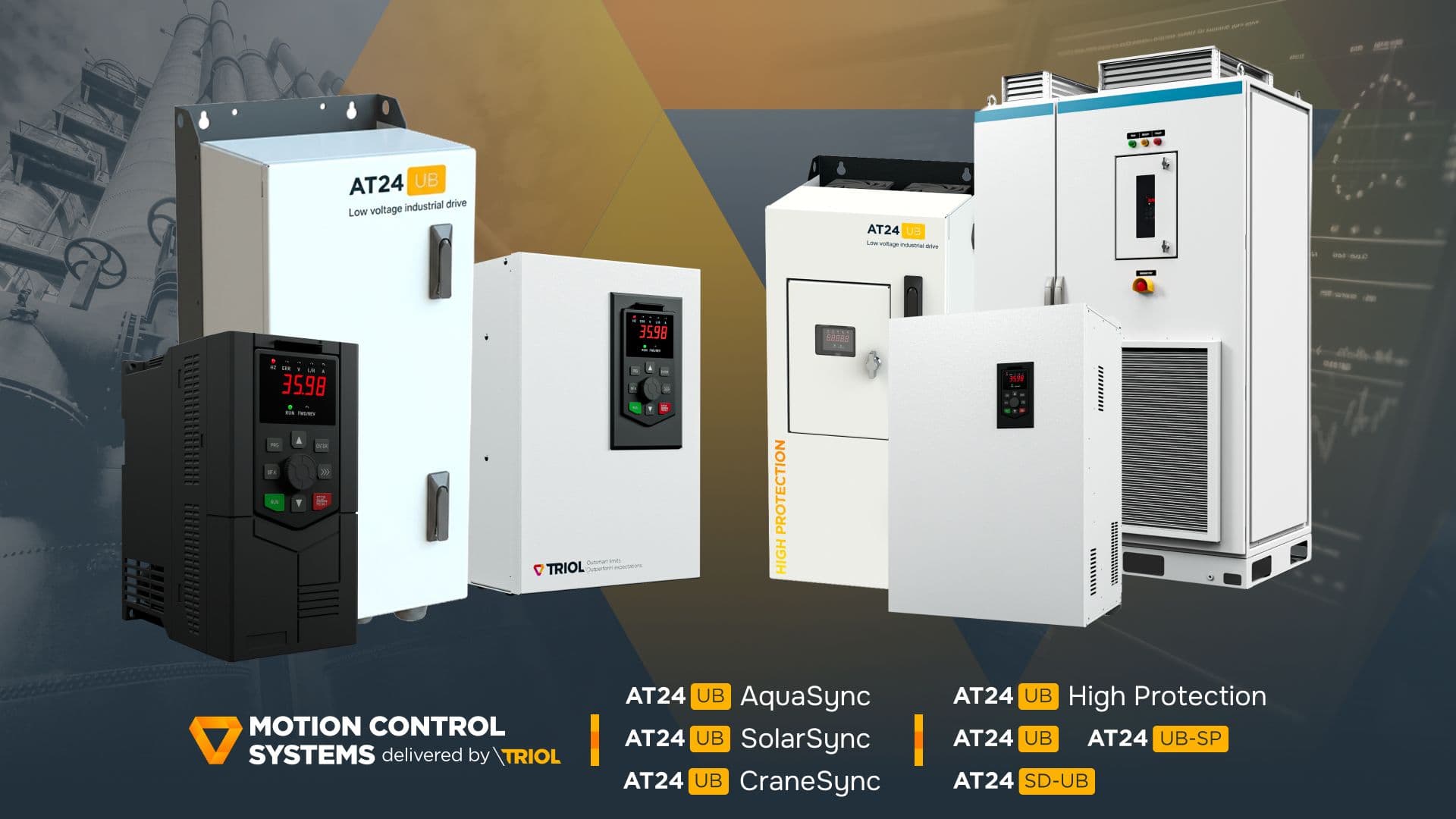
Search for "AT24 UB" and you'll find seven different product lines, not one drive with seven names. That's not a naming accident - each line is built for a different combination of environment, application, and budget. Picking the wrong one doesn't mean the drive fails; it usually means you paid for protection you didn't need, or skipped protection you did.
This article is the map. Read it once and you'll be able to look at any pump, fan, crane, or water system on your site and know which AT24 UB line it belongs to - before you ever open a datasheet.
Same core drive technology throughout the family - the difference between lines is the enclosure, the software, and the level of pre-engineering, matched to where and what you're driving.
The family at a glance
Every AT24 UB line is built on the same underlying drive platform - the same control quality, the same communication options - but packaged differently depending on the job. Three questions decide which line you land on: How is it powered? Where does it physically live? Is it doing a generic job or a specialized one?
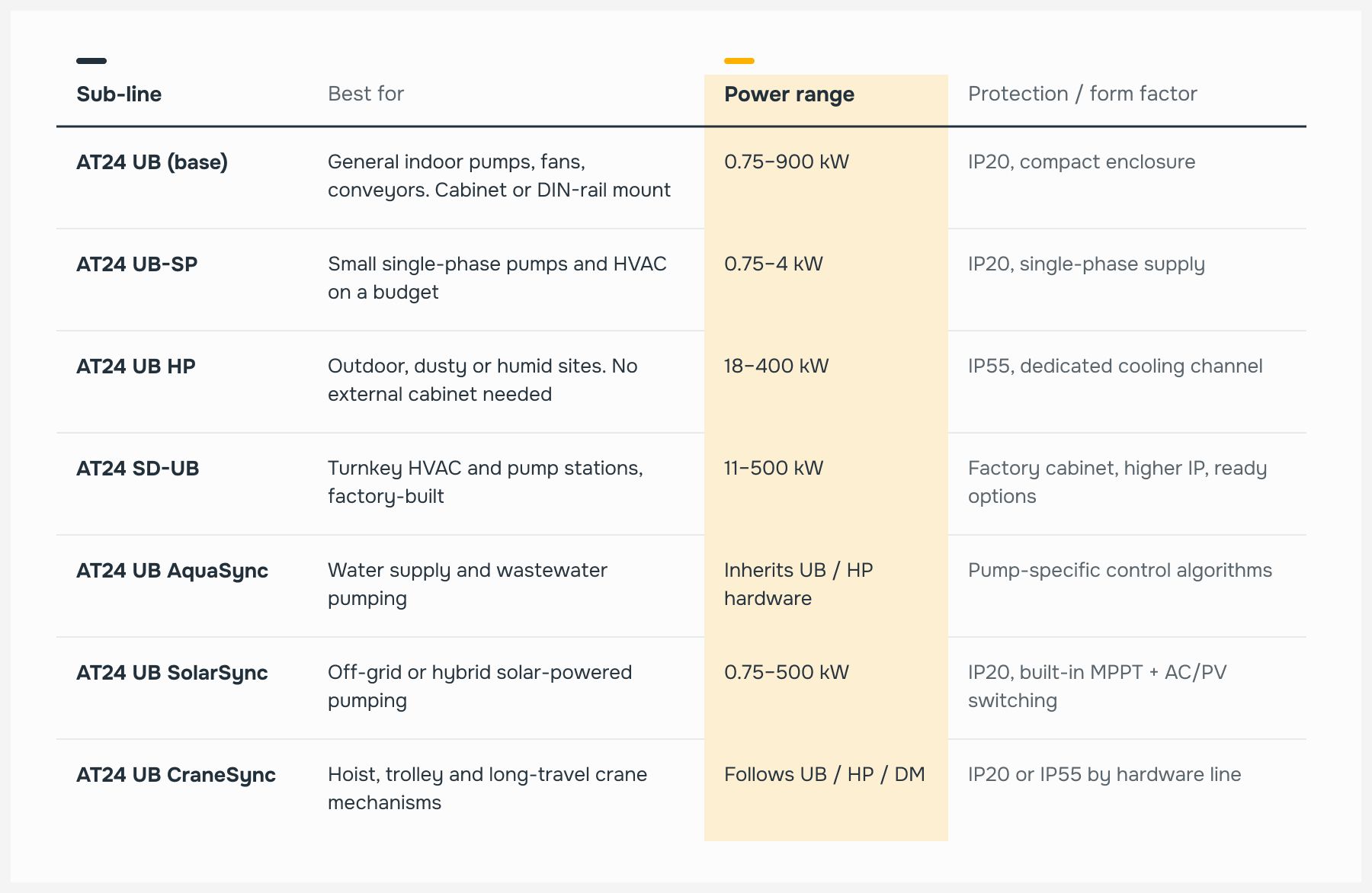
Table 1. The AT24 UB family - sub-line, best-fit use case, power range, and protection/form factor.
The most visible difference between the lines is scale. AT24 UB-SP tops out at 4 kW - a small circulation pump or extractor fan. The base AT24 UB line, by contrast, runs all the way to 900 kW - large industrial pumps, compressors, and process fans. The chart below lines them up side by side.
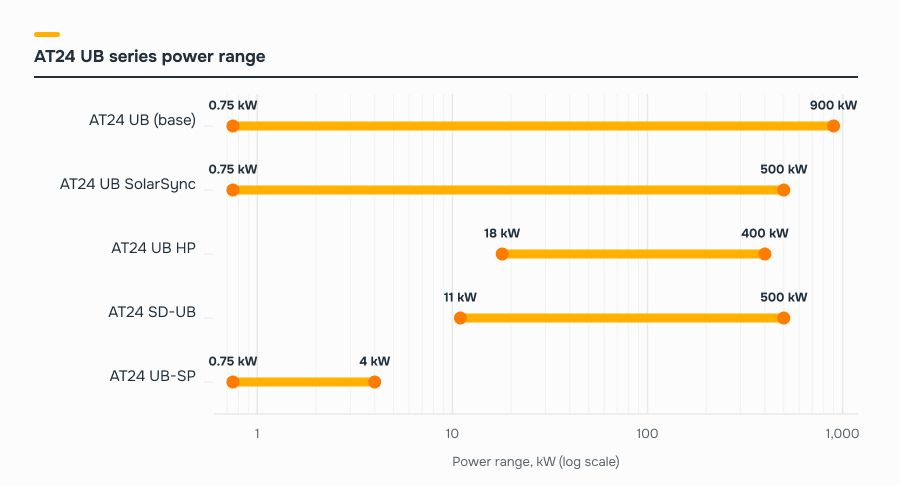
Figure 1. Power range covered by each sub-line. AquaSync and CraneSync are not shown separately - they inherit the power range of whichever hardware line (UB or UB HP) they're built on.
Enclosure and environment: where does it actually live?
This is the question that trips people up most often, because it's tempting to default to "just get the IP55 version, it's safer." That's not free - IP55 enclosures, dedicated cooling channels, and outdoor-rated hardware cost more than a cabinet-mounted IP20 drive, precisely because they're solving a problem you may not have.
- Indoors, in a cabinet or electrical room: AT24 UB (base) or AT24 UB-SP for small single-phase loads.
- Outdoors, dusty, humid, no cabinet on hand: AT24 UB HP - the enclosure and cooling channel are already built for it.
- You want the cabinet, breakers, and options pre-engineered for you: AT24 SD-UB - a factory-built system, not a component.
Generic duty vs. specialized software
Three lines in the family aren't defined by their enclosure at all - they're defined by the software running on top of standard AT24 UB or AT24 UB HP hardware, purpose-built for one application:
- AT24 UB AquaSync - pump-specific control for water supply and wastewater systems.
- AT24 UB SolarSync - built-in MPPT and AC/PV switching for solar-powered or off-grid pumping.
- AT24 UB CraneSync - hoist, trolley, and long-travel algorithms with synchronized multi-drive control, available on UB, HP, or direct-mount (DM) hardware depending on how exposed the installation is.
If your application matches one of these three, start there - the choice of enclosure (UB, HP, or DM for CraneSync) still follows the same indoor/outdoor logic as the general-purpose lines.
How to pick your model in four questions
Walk through the questions below in order. Most sites resolve to an answer by the second or third question.
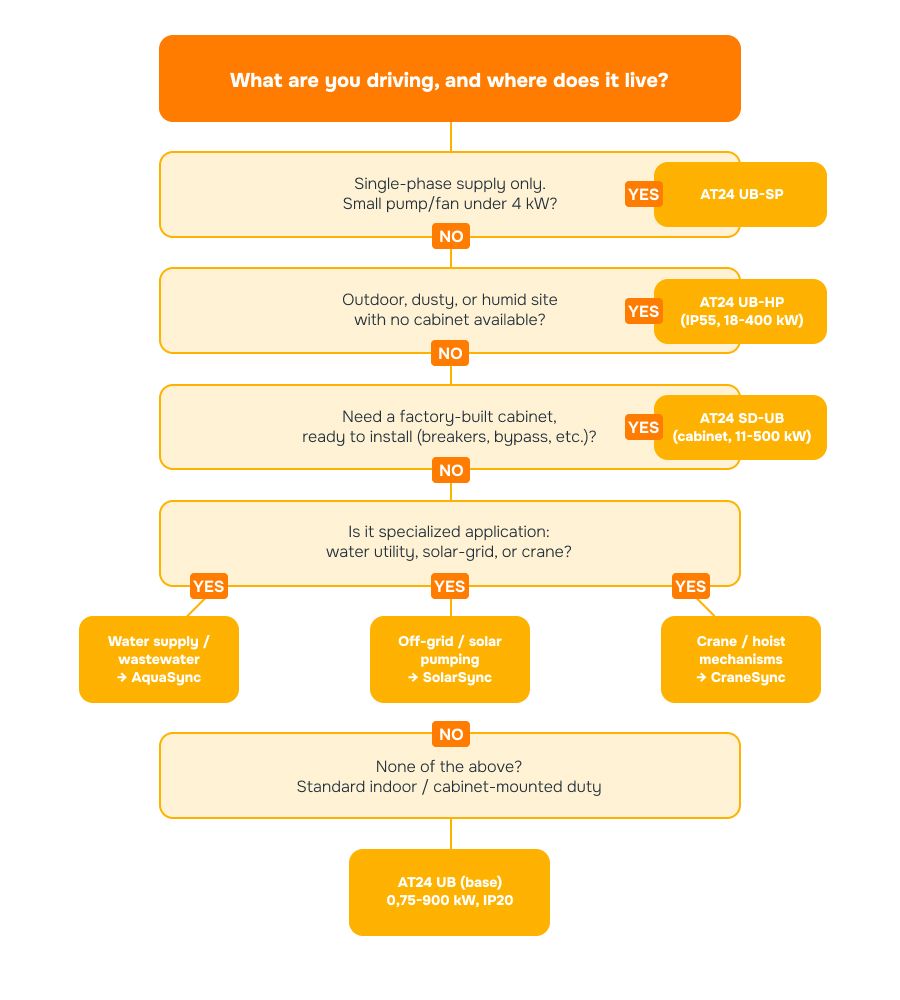
Figure 2. Decision tree - follow the questions top to bottom to land on your AT24 UB sub-line.
Not sure which branch applies to your site? Send us the application, power, and installation environment - we'll confirm the right model in one reply.
Talk to the Triol team about matching the right AT24 UB model to your pump, fan, HVAC, water, solar, or crane application.