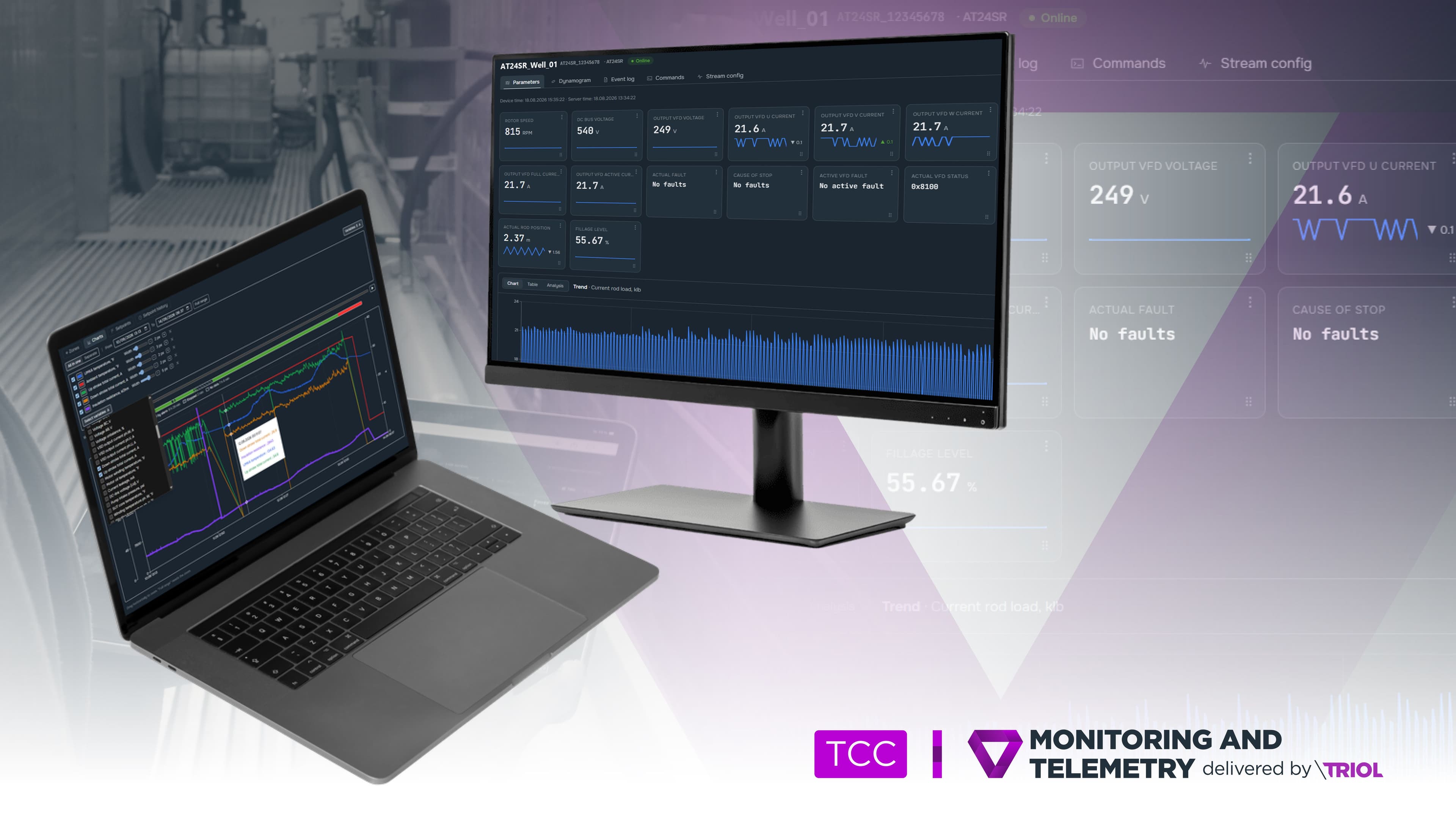
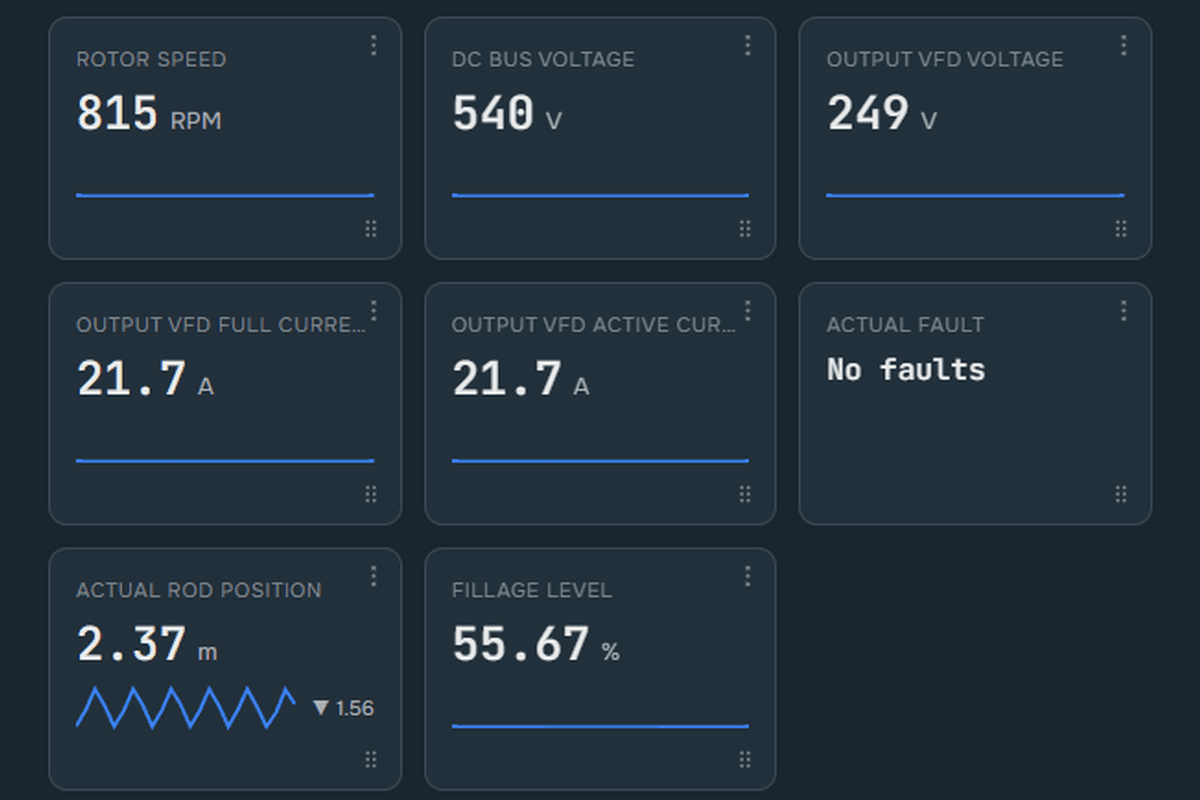
Every drive, pump and well on a site produces data around the clock. Rotor speed, currents, rod loads, pressures, temperatures, stop codes.
In most operations, that data stays locked in the controller until someone drives out to read it, often after the problem has already cost production.
Triol Cloud Control (TCC) changes that. It is a single workspace for monitoring, diagnostics and control of industrial equipment, built for oil production and for industry.
It works with Triol controllers and with equipment from any other manufacturer, so one platform can cover the whole fleet.
The goal is simple: more output, lower operating costs and fewer unplanned stops.
Connect everything, not just Triol
Mixed fleets are the norm, not the exception. TCC is built for that reality.
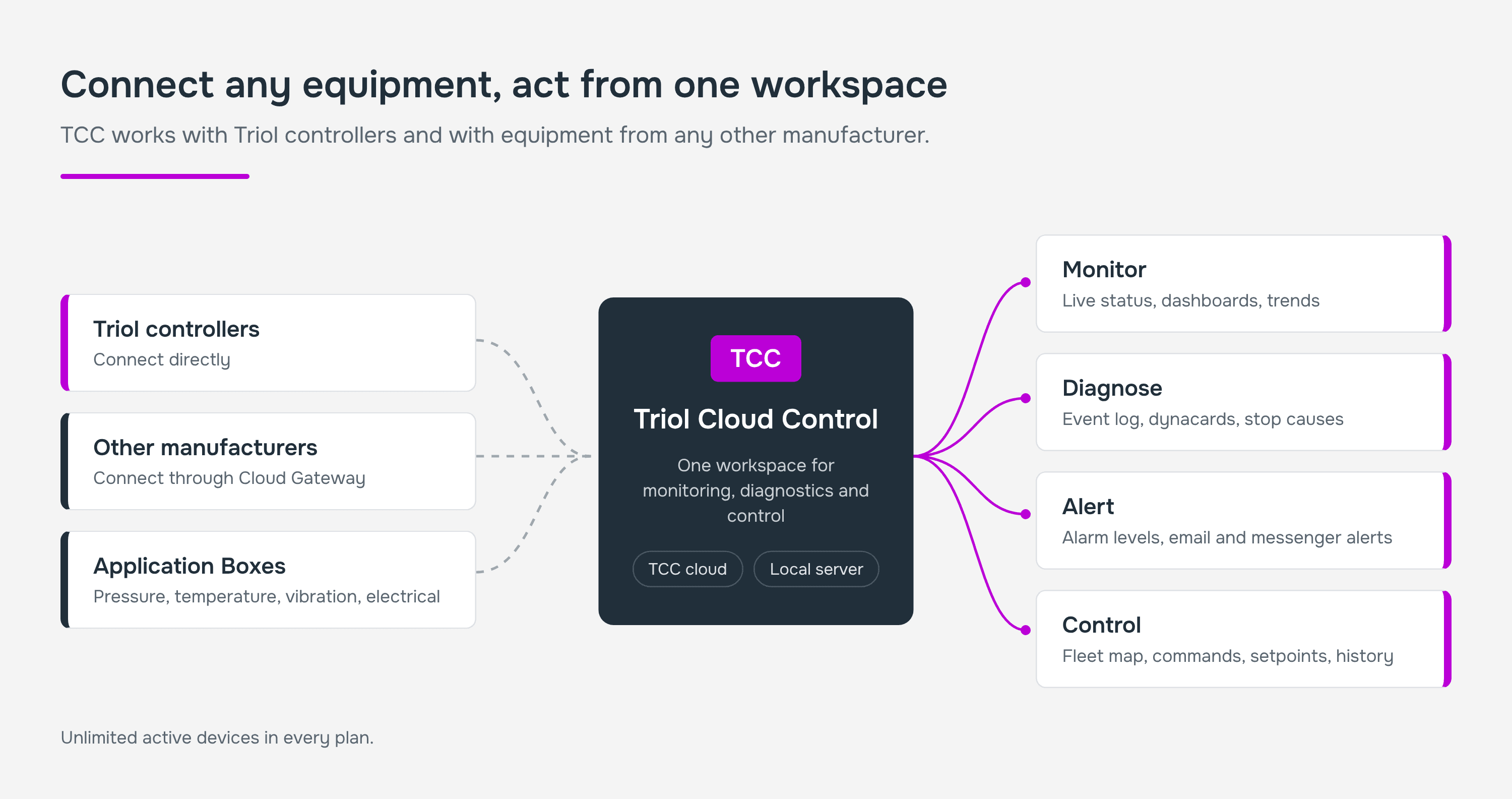
- Triol controllers connect to TCC directly.
- Equipment from other manufacturers connects through the Triol Cloud Gateway.
- Application Boxes add the measurements a controller does not provide on its own: pressure, temperature, vibration and electrical parameters.
All of it lands in the same workspace, with no limit on the number of active devices in any plan.
See the whole picture at a glance
TCC brings key readings and trends together in tables and dashboards for each device. Operators see live status, spot changes early and put their attention where it is actually needed.
When something deviates, TCC lets you line up parameter trends against operating events.
That makes it possible to trace a problem to its cause, whether it is a single stop or a fault that has been building for weeks.
Dynacards that do more than draw a curve
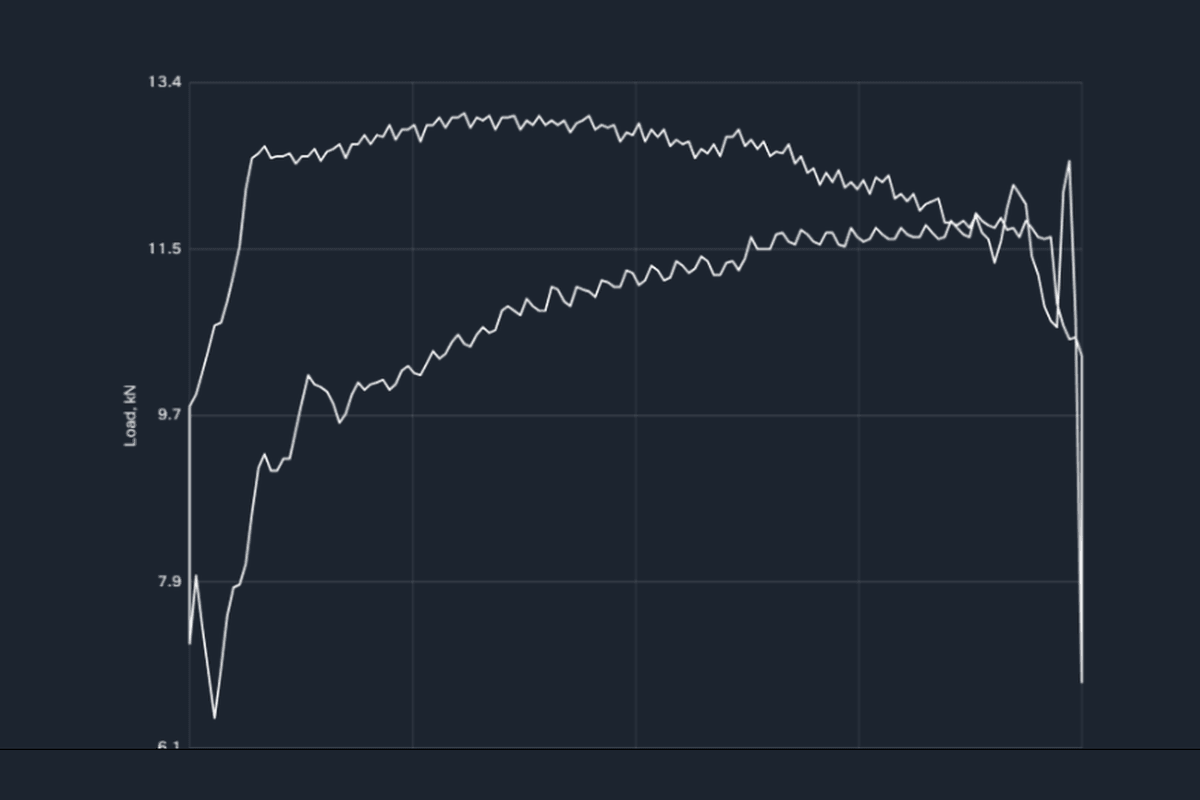
For sucker rod pumping (SRP) and Triol's linear ESP (EP02) wells, the dynacard is the most important diagnostic tool there is.
TCC gives engineers a full toolkit around it:
- View dynacards by date.
- Follow how the card shape changes along a timeline.
- Compare shapes and operating periods side by side.
- Run automatic analysis.
Instead of reading one card at a time, engineers can see how a well is evolving and act before a pump-off condition or mechanical issue turns into a failure.
From events to alarms
Every stop has a reason, and TCC records it.
Operators can review operating cycles and start-up plots with the cause of each stop, and filter events by category.
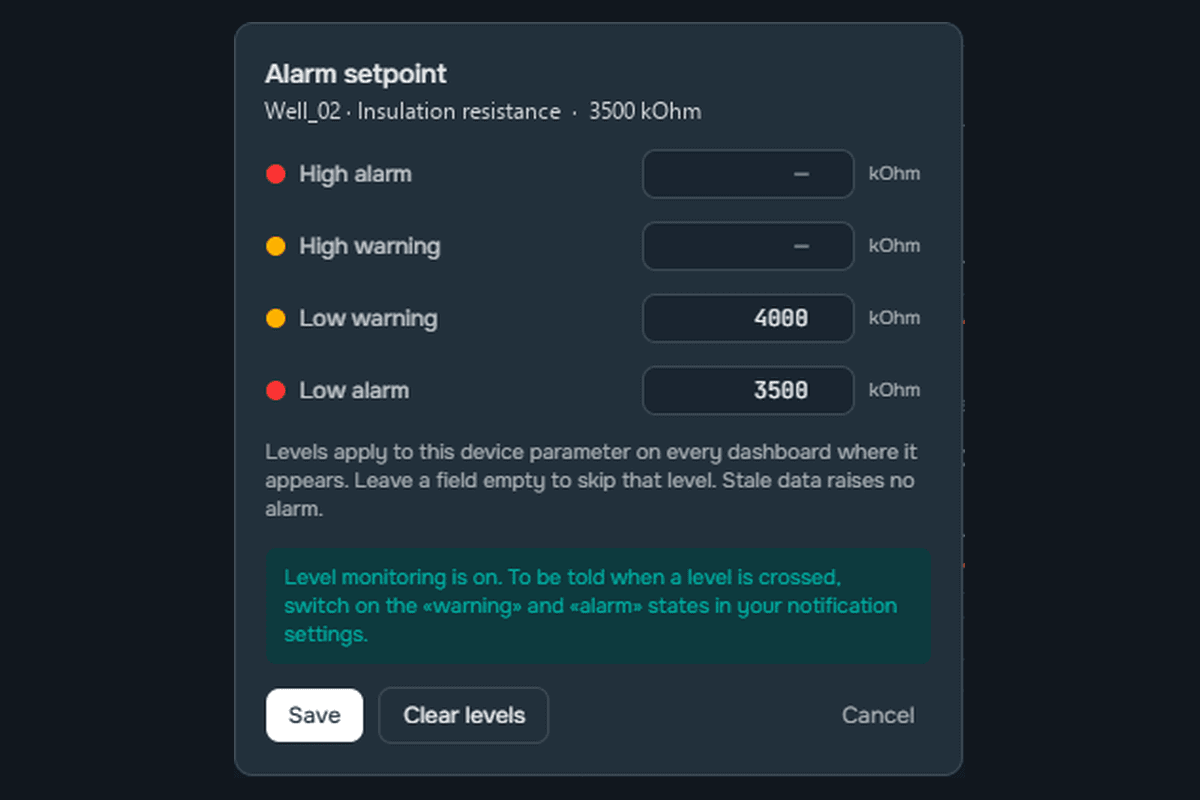
Alarm levels are set per parameter, with high alarm, high warning, low warning and low alarm thresholds.
When a level is crossed, TCC sends an alert by email or to a messenger. Stale data raises no alarm, so teams are not chasing ghosts.
The fleet in context, and control from anywhere
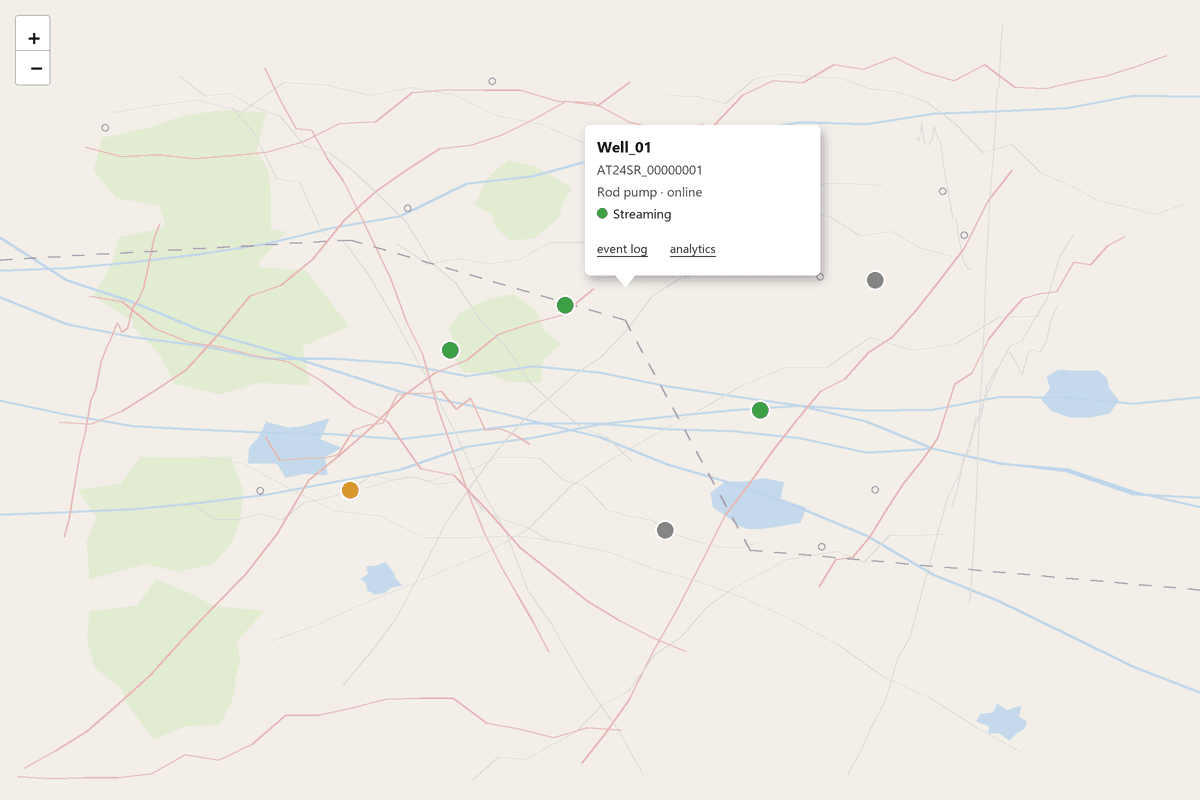
TCC places every asset on a real map. From the map, users check status and open equipment data directly.
Control is built in, not bolted on. Authorized users send commands and change setpoints remotely, and every action is kept in a full command history.
That means fewer site visits for routine adjustments, and a clear record of who changed what and when.
Digital twins and an AI agent
TCC also goes beyond monitoring.
Equipment and process models act as digital twins: they find hidden losses and let engineers test new settings before applying them to the real asset.
An AI agent works alongside the team. It audits equipment, explains deviations and verifies whether a change actually delivered the expected result.
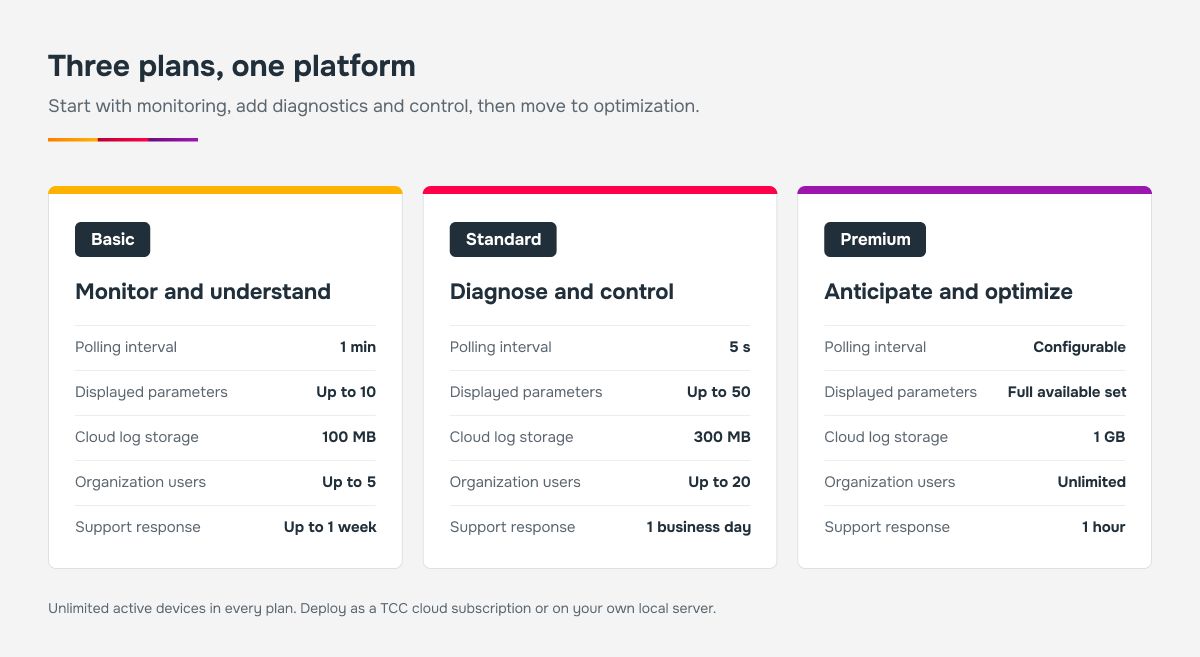
TCC comes in three plans, so operators can start where they are and grow from there.
Basic is for monitoring and understanding. Standard adds diagnostics and control. Premium is built to anticipate problems and optimize performance.
Cloud or on site: your choice
TCC adapts to how a company manages its IT and its data.
- TCC cloud: a subscription service with no server infrastructure to buy or maintain.
- Local server: TCC runs inside the customer's own IT environment, with all data stored on their premises.
See more. Act with confidence.
TCC is part of Triol's Monitoring and Telemetry solutions, alongside downhole measuring systems TM01 and TM02.
Together, they give operators the visibility to catch problems early and the control to fix them remotely.
To see TCC on your own equipment, download the catalogue or contact our team.
Product page: Triol Cloud Control TCC