ESP reliability, offshore integration and artificial lift configured around the well.
Reliable oil production depends on equipment suited to the application and the expertise to support it throughout operation.
At the 25th WPC Energy Congress, held in Riyadh from 11 to 15 October 2026, Triol connected with operators, engineers and partners to discuss its artificial lift solutions, technical support and performance in the field.
At Stand 3165 in Hall 3, Denys Burlutskyi, our Head of Technical Support, met operators, engineers and partners from across the region to discuss artificial lift, service and field performance. His presence brought technical support expertise directly into the discussion of equipment performance in the field.
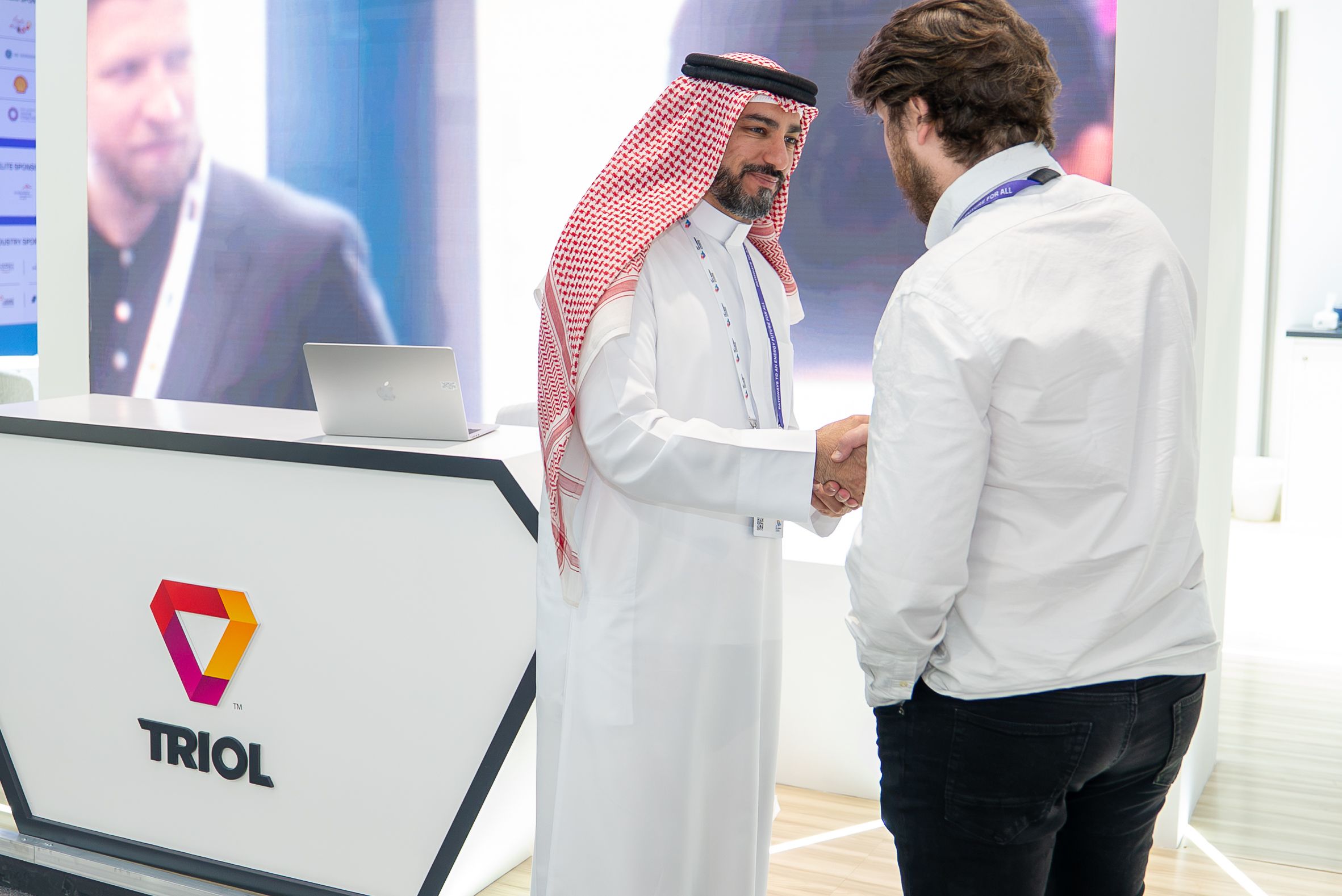
From the exhibition floor in Riyadh: discussing artificial lift applications, field requirements and technical support.
Bringing the energy discussion down to the well
Under the theme “Pathways to an Energy Future for All,” WPC brought together perspectives on energy supply, technology and the systems needed to support future demand.
Triol’s contribution began at the application level: how power reaches a downhole motor, how the equipment responds to its operating environment, and how the configuration fits the well.
At the exhibition, our focus was on artificial lift solutions configured around those requirements, connecting ESP control, system integration and downhole monitoring with the conditions each application must handle.
Protecting the ESP beyond the surface
Long ESP cable runs introduce a problem that can develop while the pump continues operating. Voltage pulses reflected at the motor end can create overvoltage, repeatedly stressing the winding insulation.
AT27 ED ESP addresses this with an integrated sine-wave filter that helps reduce reflected-wave overvoltage and the electrical stress reaching the motor.
The selection process therefore needs to consider the complete electrical path: drive, cable and motor, alongside the supply conditions and production requirements.
AK06 adds another dimension to that application-based approach. Its configurations accommodate different motor types, power-quality requirements and environments.
Dedicated starting functions, including jog, hard-start and swing modes, together with a gas-lock algorithm, address specific difficulties in well operation.
The starting point is the operating requirement. The drive configuration follows.
Making the complete power train fit offshore
Offshore, the engineering challenge extends from the electrical path to the platform around it.
An offshore ESP installation may need transformers, a variable speed drive, cooling, protection and monitoring within a restricted footprint. Installation access, salt exposure and humidity all influence how that equipment must be engineered.
E-Cabinet integrates a step-down transformer, AK06 drive and step-up transformer into one offshore system.
Its modular arrangement and protective enclosure address the practical requirements of fitting, operating and maintaining the power train on a platform.
Considering these components together brings installation and service requirements into the design from the beginning.
Responding when well conditions change
Triol’s artificial lift offering at WPC also addressed wells where conventional ESP operation becomes more difficult.
High gas content, viscous fluids, solids and declining production call for careful assessment of the lift method.
EP02 uses a linear permanent magnet motor to drive a reciprocating pump downhole, without a rod string or surface pumping unit. It offers a different artificial-lift architecture for demanding well conditions.
Visibility into those conditions matters alongside the choice of equipment.
TM01 provides downhole measurements for ESP applications, including pressure, temperature, vibration and leakage current. TM02 extends downhole monitoring to other lift methods, including sucker rod pumping, PCP and gas lift.
The same selection discipline applies to auxiliary equipment. Where stable operation requires fixed-speed control, AK01 provides an alternative to specifying a variable frequency drive unnecessarily.
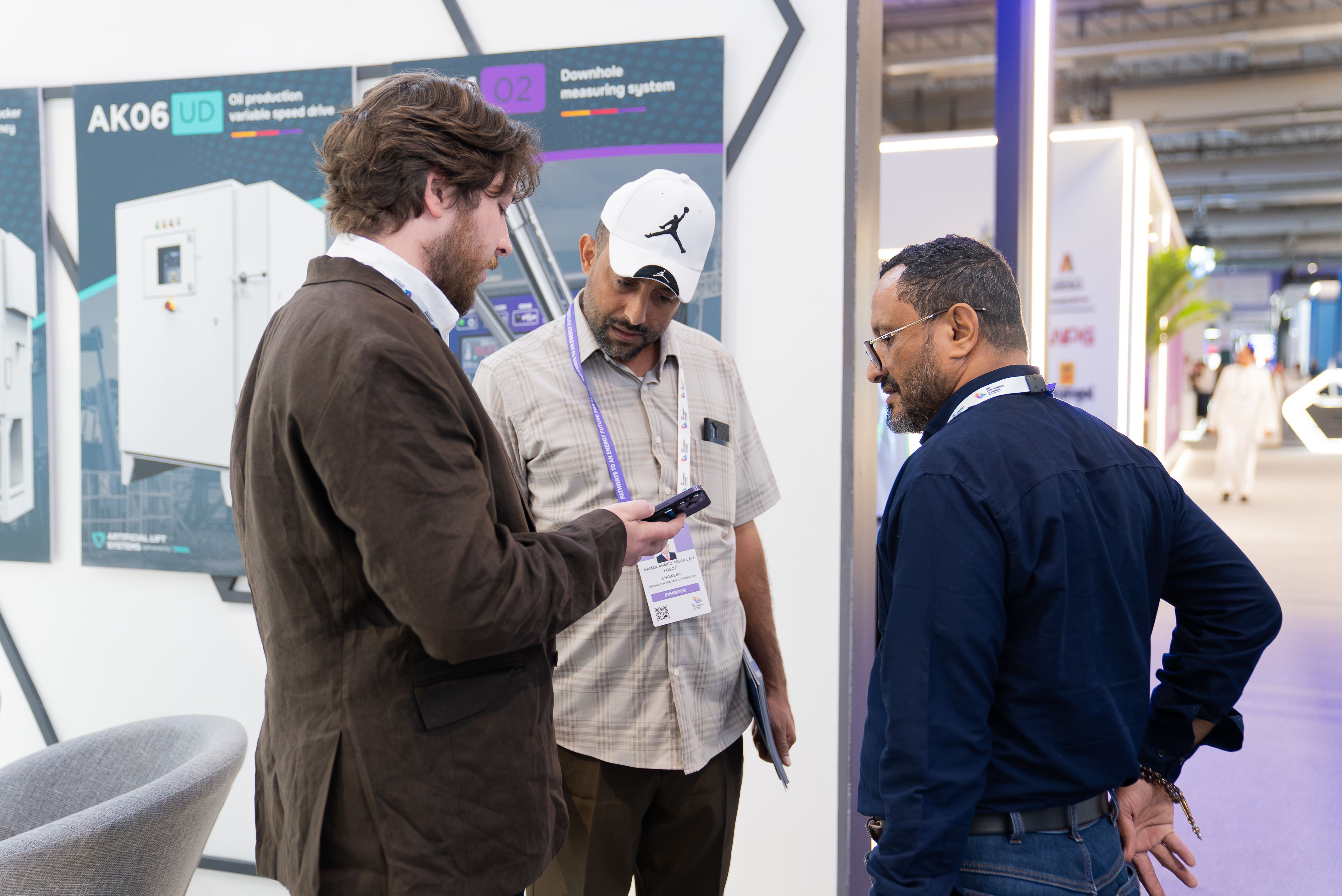
Technical discussions at WPC Energy Congress 2026: connecting field requirements with the right artificial lift configuration.
Technical expertise in Riyadh. A practical next step.
Through the congress, Denys’s presence gave visitors direct access to Triol’s technical support expertise.
This connected the engineering behind our artificial lift solutions with the service and support needed throughout their operating life.
Thank you to everyone who took the time to meet him and discuss their applications.
The next step is to examine individual requirements in detail: motor and cable data, electrical supply, well conditions, installation constraints and the support needed throughout operation.
If we met in Riyadh, we welcome the opportunity to continue that discussion. If you were unable to attend, our team is available to review your application.
Share your well conditions and project requirements at or@triolcorp.com.
Let’s identify the configuration your field needs.