Redefining What’s Possible and Achieving Results

We are fast where others are slow, flexible where others are rigid, and committed where others are distant.
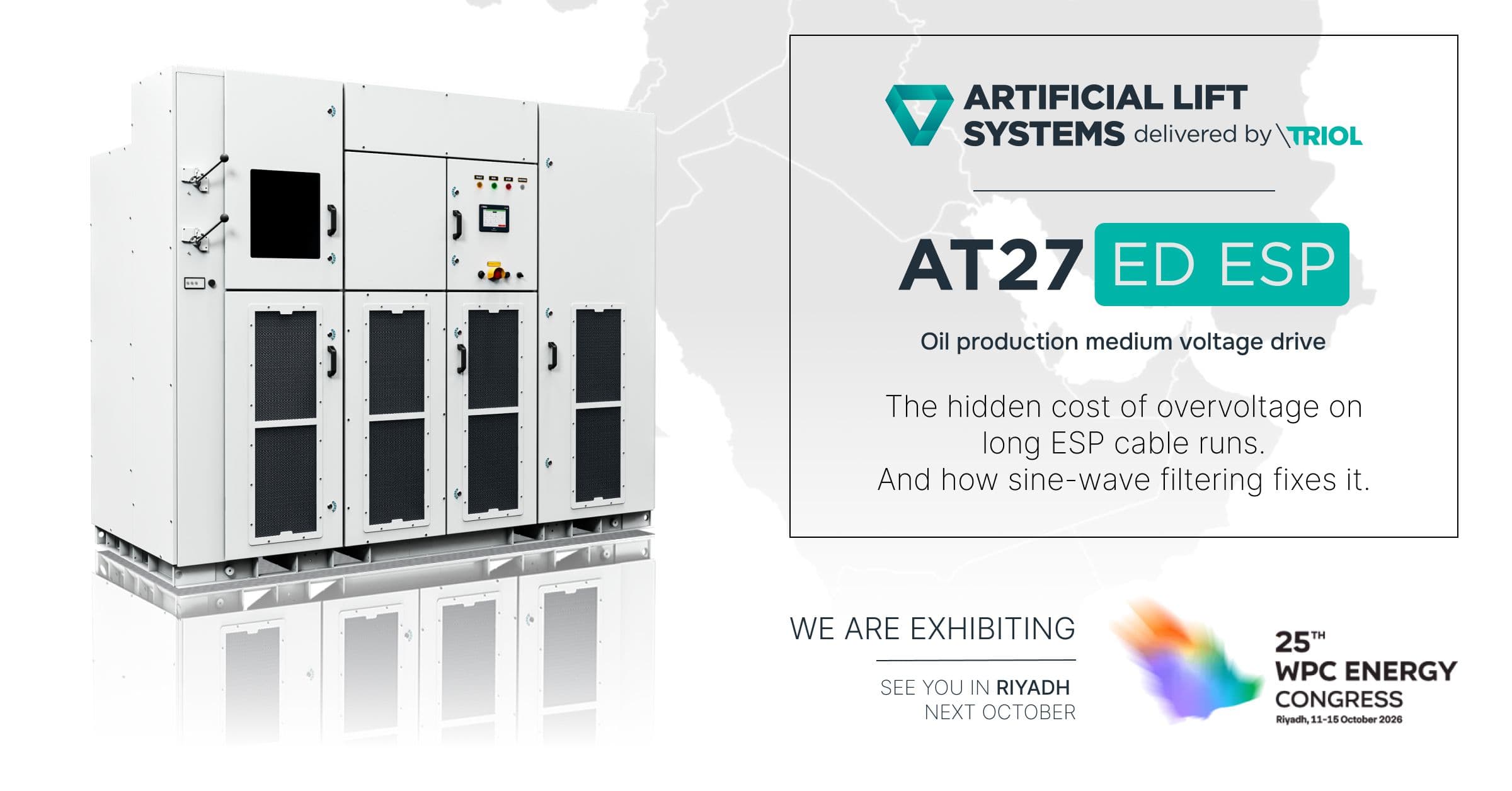
AT27 ED ESP helps protect submersible motors on long cable runs by reducing reflected-wave overvoltage, improving output waveform quality, and lowering electrical stress on motor insulation.

Stay in touch
Submit your request or question, and our team of specialists will contact you.
In an ESP system, the drive operates at the surface while the motor may be located far below it. Between them is a long power cable that does more than carry electricity.
The longer the cable, the greater its influence on the voltage reaching the motor. If this effect is not properly addressed, the result can be repeated electrical stress, accelerated insulation aging, and a shorter ESP operating life.
A variable frequency drive controls the motor using rapidly switching voltage pulses. As these pulses travel through a long ESP cable, part of the signal can be reflected at the motor end.
These reflected waves can produce voltage peaks higher than the intended drive output. The motor may continue operating, but its winding insulation is repeatedly exposed to additional stress.
The problem is therefore easy to overlook. There may be no immediate shutdown or visible warning, while the electrical stress continues to build over time.
When motor insulation deteriorates, the cost goes beyond replacing one component.
An ESP failure can involve production losses, diagnostic work, equipment replacement, and a costly intervention at the well. A voltage problem that begins at the surface can therefore become a major operational problem underground.
This is why the drive, cable, and motor must be considered as one electrical system.

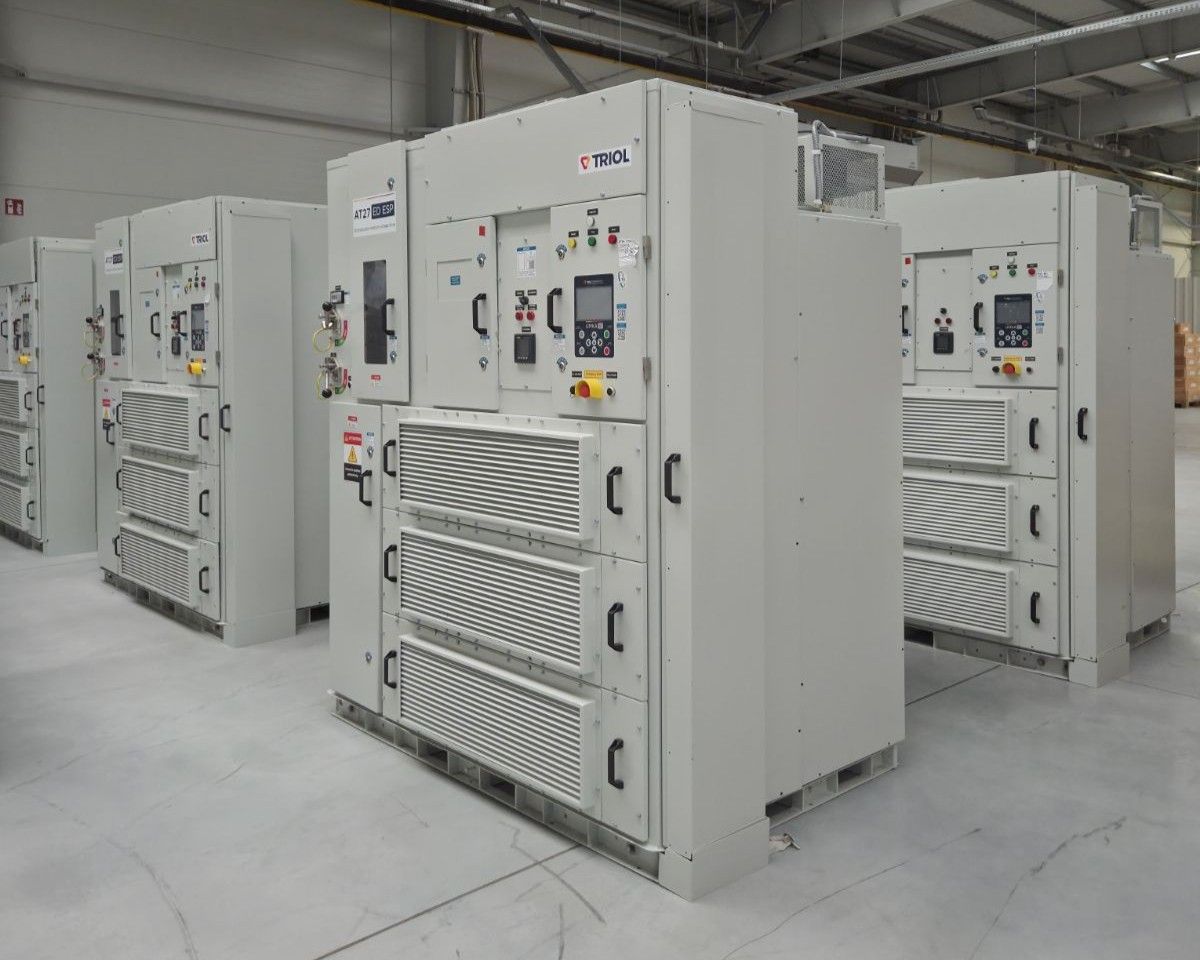
AT27 ED ESP is a medium-voltage drive developed specifically for artificial lift and demanding ESP applications.
Its integrated sine-wave filter improves the quality of the voltage and current supplied to the motor. It helps prevent dangerous overvoltage at the end of long cable lines, reducing stress on motor insulation and the risk of premature ESP failure.
The drive delivers a near-sinusoidal output with total harmonic distortion of no more than 5% for voltage and 2% for current. This supports more stable motor operation without requiring a separate external output filter.
Protecting an ESP begins long before a failure alarm appears. It begins with controlling what reaches the motor on every pulse.
Long cable runs are only one of the factors that influence the correct drive configuration. Motor type, well conditions, power quality, and production requirements must also be considered.
Meet the Triol team at the 25th WPC Energy Congress in Riyadh to discuss your application.
11-15 October 2026
Stand 3165
Outsmart limits. Outperform expectations.